Table of Contents
Signs Your Vaginal pH May Be Out of Balance (And What You Can Do About It)
May 07, 2026

Your body is constantly communicating with you. Sometimes that communication comes in the form of subtle shifts you might brush off like a change in odor, a little more discharge than usual, or a persistent itch that does not seem to go away. These signals are worth paying attention to, and vaginal pH balance is often at the root of them.
Understanding what your pH is doing, and why, can help you make sense of what your body is telling you.
What Is a Healthy Vaginal pH?
pH is a scale that measures acidity, running from 0 (most acidic) to 14 (most alkaline), with 7 being neutral. A healthy vaginal pH typically falls between 3.8 and 4.5, which is mildly acidic. That acidity is not a flaw — it is protective.
The vaginal microbiome is home to billions of bacteria, the most important of which are Lactobacillus strains. These beneficial bacteria produce lactic acid, which keeps the vaginal environment acidic enough to discourage the overgrowth of harmful bacteria and yeast. When that balance holds, things tend to feel normal. When it shifts, you may start to notice signs.
Signs Your pH Might Be Off
Not every symptom points directly to pH, but there are a few common patterns worth recognizing.
A change in vaginal odor is one of the most consistent signals. A strong or unfamiliar smell, especially one that is fishy or unusually sharp, can indicate that harmful bacteria are growing in an environment that has become less acidic than it should be. Vaginal odor causes are varied, but a disrupted pH is frequently involved.
Other signs to watch for:
- Unusual discharge in color, consistency, or volume
- Persistent itching or irritation without an obvious external cause
- A burning sensation, particularly after sex or urination
- General discomfort that feels different from your normal baseline
These symptoms can overlap with infections like bacterial vaginosis (BV) or yeast infections, which is why it is always worth checking in with your healthcare provider if something feels off. Knowing your baseline makes these shifts easier to catch early.
Common Triggers That Disrupt pH Balance
pH is not fixed. It responds to what is happening in your body and your environment, which means many everyday factors can nudge it in the wrong direction.
Diet and hydration play a quiet role. Diets high in sugar can promote yeast overgrowth, and a lack of variety in fermented or fiber-rich foods may affect the broader microbial environment in your gut, which in turn influences vaginal health.
Hormonal shifts are another significant trigger. Estrogen supports the growth of Lactobacillus, so any time estrogen fluctuates (during your menstrual cycle, postpartum, perimenopause, or while on hormonal birth control) your vaginal pH can shift with it. This is why some people notice more sensitivity or discharge at certain points in their cycle.
Stress is often overlooked as a vaginal health factor. Chronic stress raises cortisol, which can dampen immune function and reduce the body's ability to maintain a balanced microbiome.
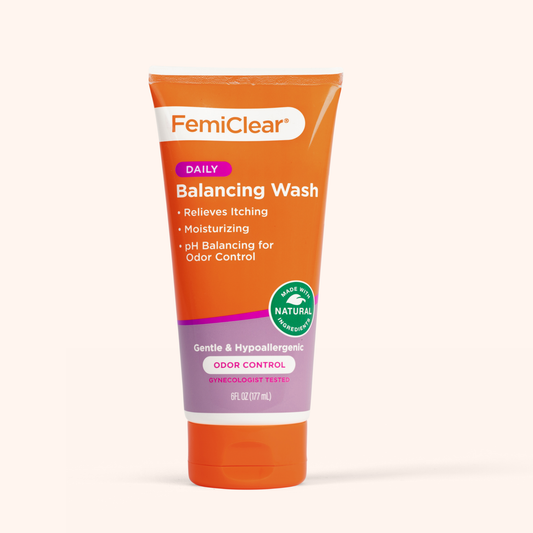
Hygiene products are worth a close look too. Many soaps, douches, scented wipes, and even some laundry detergents are alkaline or contain fragrances that disrupt the vaginal environment. The vagina is self-cleaning. Products marketed as "freshening" often do more harm than good.
Habits That Help Maintain Balance
The good news is that supporting vaginal pH balance does not require a complicated routine. Most of what helps is fairly straightforward.
Wear breathable underwear, ideally cotton, and avoid spending extended time in damp or tight clothing. Moisture creates an environment where harmful bacteria and yeast thrive. When it comes to hygiene, warm water on the external vulva is enough — the internal vaginal canal does not need any assistance.
Be mindful of what comes into contact with your body, including lubricants, condom materials, and bath products. Fragrance-free and pH-balanced options are worth seeking out. Some people also find it helpful to urinate after sex to reduce the chance of bacteria migrating where they should not.
Diet matters more than most people realize. Foods rich in probiotics like yogurt, kefir, and fermented vegetables can support your broader microbiome, and staying well-hydrated keeps your body's systems functioning as they should.
How Probiotics Support Your Vaginal Microbiome
Vaginal microbiome support has become one of the more researched areas in women's health over the last decade, and the findings are meaningful. Specific strains of Lactobacillus, particularly Lactobacillus rhamnosus and Lactobacillus reuteri, have been studied for their ability to colonize the vaginal environment and help maintain an acidic pH.
When taken consistently, these probiotic strains can help restore and sustain the balance of beneficial bacteria that keeps your vaginal environment functioning well. For anyone who experiences recurring BV, yeast infections, or general vaginal discomfort, daily probiotic support is one of the most evidence-informed vaginal health tips available.
It is not a quick fix. Probiotics work over time and as part of a broader approach. But for daily maintenance, they are a genuinely useful tool.
If you are looking for daily support, FemiClear Daily Vaginal Probiotic is formulated to help maintain a healthy vaginal microbiome. Shop FemiClear Probiotic.
Sources
- Vaginal pH Value for Clinical Diagnosis and Treatment of Common Vaginitis — PMC/NIH
- The Vaginal Microenvironment: The Physiologic Role of Lactobacilli — PMC/NIH
- Tips To Keep Your Vagina Healthy — Cleveland Clinic
- Effect of Oral Probiotic Lactobacillus rhamnosus GR-1 and Lactobacillus reuteri RC-14 on the Vaginal Microbiota — PMC/NIH
May 07, 2026

Daily Vaginal Probiotic
Supports Healthy Yeast & Bacteria Balance, Vaginal pH, and Moisture
Learn More